Camper maintenance explained simply – avoid expensive repairs
Black Rhinoceros2025-03-28T15:07:11+00:00Table of Contents
Why is regular RV maintenance important?
A well-maintained motorhome is essential for both the vehicle's lifespan and your safety on the road. By performing regular maintenance—such as checks on tires, brakes, gas systems, and moisture—you can prevent malfunctions that could cause danger or delays during your trip. Experts recommend having a full service performed annually, even if your motorhome is rarely driven. This prevents costly repairs in the long run and ensures you can always set off with peace of mind.

Annual check-up: what should you check?
It is recommended to have your RV serviced annually. Check the following points:
- Tires and wheels
Check tire pressure, tread depth (minimum 1.6 mm, preferably 3 mm), and look for drying out or cracks. Don't forget the spare tire either. Make sure the wheels are tightly secured and do not show irregular wear. - Brakes and chassis
Test the overrun brake and parking brake, and check if the brake pads are still in good condition. Inspect the chassis for rust, cracks, and loose parts. If in doubt, have a specialist check everything. - Electrical wiring
Check that all lighting (indoor and outdoor) is functioning correctly and that there are no melted or damaged cables. Also check fuses, and the operation of outlets and appliances. A visual inspection can detect many problems early on. - Gas installation
Inspect the gas hoses for dryness and cracks, and check that the pressure regulator is functioning properly. Have a professional leak test performed annually. Use a gas detector for added safety during use. - Moisture measurements
Perform a moisture measurement on vulnerable areas such as corners, seams, windows, and the roof. Moisture problems can lead to mold, wood rot, and expensive repairs. Use a reliable moisture meter or have it done by an expert. - Water pipes and pump
Check if the water pump is working and shows no leaks. Flush all pipes thoroughly and check if couplings are securely fastened. Remember to drain the system after each season to prevent freezing. - Window and Door Confirmation
Check that windows and doors open and close smoothly and seal properly. Look for play in the hinges and cracks in the seals. Poorly sealing windows can lead to moisture problems or heat loss.

Tires and tire pressure: your safety starts with road contact
Tires are literally the only connection between your camper and the road surface – their condition directly affects ride comfort, grip, and safety. Regularly check the Tire pressure Inflate to the recommendation in the manual, as tires that are too soft can cause overheating and uneven wear, while tires that are too hard will negatively affect handling.
also pay attention to the field depth: the legal minimum is 1.6 mm, but for campers, a minimum of 3 millimeters recommended to maintain sufficient grip, especially in wet weather or on long distances.
Finally, visually check for drought cracks, hairline cracks on the sidewall of the tire, and other signs of wear—especially if your RV has been sitting idle for a long time or if the tires are more than six years old. When in doubt, always replace the entire set; safety comes first.
Moisture in your RV: a silent killer for your interior
Moisture is one of the biggest enemies of motorhomes and is often only noticed when damage has already occurred. Especially during the winter months, when motorhomes are parked for extended periods, condensation can lead to mold formation, wood rot, and irreparable structural damage. Repairing moisture problems is costly and time-consuming, so prevention is absolutely essential.
Prevention is better than cure. Follow these best practices:
- Ventilate the camper regularly, even in the winter. Open windows or roof hatches briefly at least once a week to replace stagnant, humid air with dry outside air.
- Use moisture absorbers or a dehumidifier while parked. Place several of them in strategic locations, such as the corners of the interior, the bathroom, and the kitchen.
- Check all sealant, seams, and roof hatches cracks, peeling pieces, or discoloration – these are early signs of leakage. Proactively refresh old sealant, especially in older campers.
- Measure the moisture content annually with a reliable moisture meter. Ideally, have this done by a certified specialist who has access to all critical measurement points behind walls and furniture.
A small leak can go unnoticed for months but still cause thousands of dollars in damage. By performing systematic and thorough maintenance, you protect both your investment and your health while traveling.
Cleaning and maintenance: essential for a fresh and long-lasting RV
Regular cleaning protects your camper from dirt, moisture, and wear and tear, and prevents problems like mold, leaks, and discoloration.
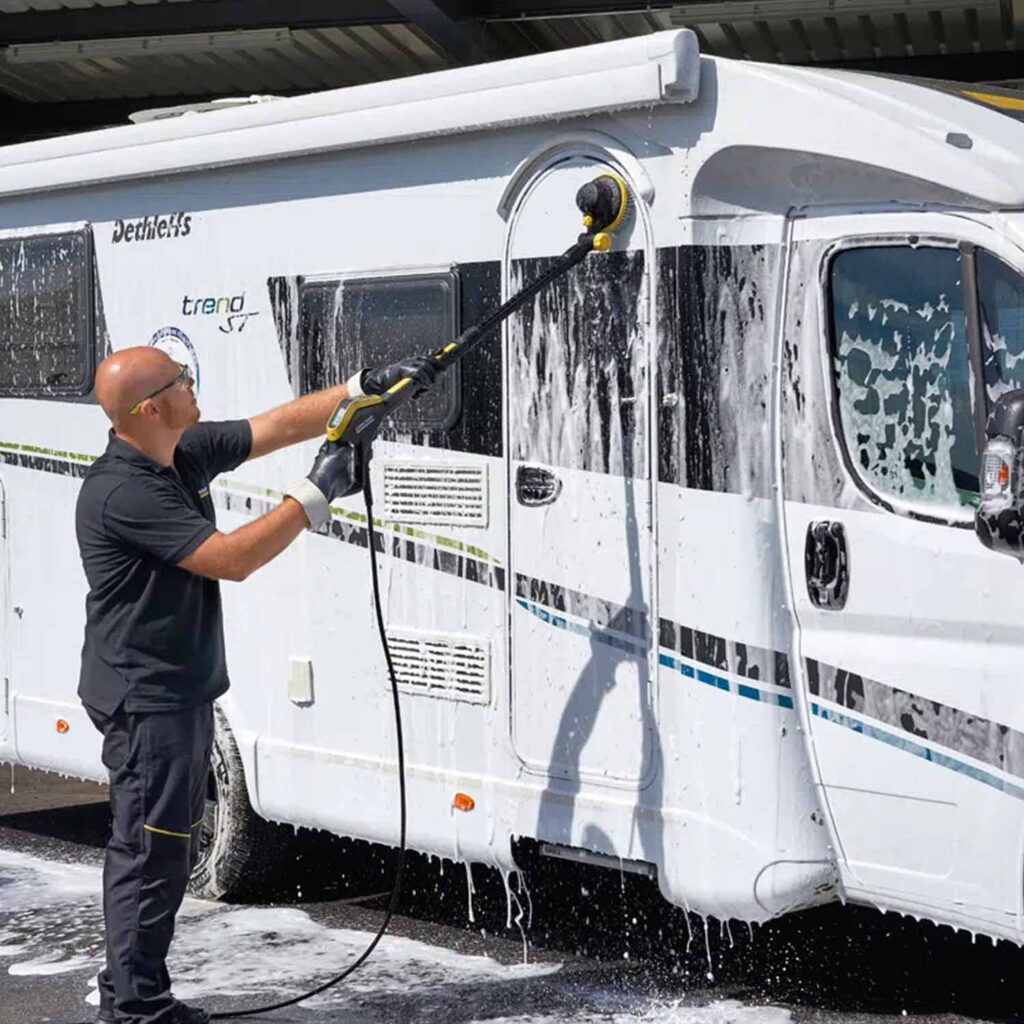
- Exterior First, rinse off heavy dirt, clean with a special RV cleaner, and apply a coat of wax for extra protection against UV rays and rain. Don't forget the wheel wells and undercarriage.
- Inside: Thoroughly clean carpets, cushions, and curtains to prevent mold and musty odors. Vacuum corners and let everything dry completely.
- Roof and roof hatches: Check for dirt, leaves, and damage. Clean the rubber seals and treat them with silicone spray to prevent drying out.
Expert advice Thoroughly clean your camper after each season and use moisture absorbers during winter storage to prevent condensation and mold formation.
Gas and Electrical System Inspections
Regularly checking and maintaining the gas installation and electrical systems in your camper is crucial for a safe trip. A poorly maintained gas installation can lead to dangerous situations such as gas leaks or fires. An annual inspection by a professional is highly recommended.
Important considerations
Gas hose Check for drying, cracks, or other damage. Replace gas hoses every five years to ensure safety.
Gas pressure regulator Test this regularly and replace it if necessary every ten years, depending on the model.
Electrical wiring: Inspect for wear, loose connections, or corrosion. Defective wiring can cause short circuits or fire.
Lighting and outlets: Test all interior and exterior lighting and check that all electrical outlets are functioning properly.
Battery Ensure the battery is fully charged and free of corrosion. A well-maintained battery will extend the life of your electrical systems.

The importance of a well-functioning brake and chassis
The brakes and chassis form the basis for the safety and stability of your motorhome. Regular checks and maintenance are essential to prevent accidents and costly repairs.
Parts to check:
Overrun brake and parking brake Test the operation and adjust if necessary. Malfunctioning brakes can increase braking distance and cause dangerous situations.
Stabilizer and shock absorbers: Check for wear or leaks. Worn shock absorbers reduce riding comfort and road handling.
Nuts and bolts Ensure all bolts are securely tightened and show no signs of rust. Loose or rusted bolts can lead to structural problems.

Stalling and protection in winter
Properly parking and protecting your camper during the winter months prevents damage from moisture, frost, and standstill. Good preparation ensures your camper is ready for use again in the spring.
Recommended Steps:
Stalling: Choose a dry, ventilated, and preferably covered storage space to protect your camper van from the elements.
Camper Van Cover Use a breathable cover to keep dirt and moisture out while allowing condensation to escape.
Water system Drain all water pipes, the water heater, and the water tank system to prevent freezing and damage.
Battery Remove the battery and store it in a warm, dry place. Connect it to a trickle charger to prolong its lifespan.
Interior: Thoroughly clean the interior, remove food items, and leave cabinets and the refrigerator door ajar for ventilation.
Author

Histudy The standard chunk of Lorem Ipsum used since the 1500s is reproduced below for those interested.